
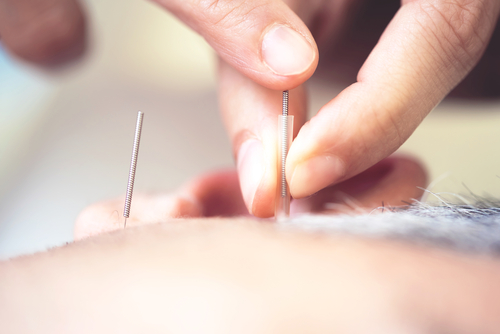
100 Hours vs. 3,000 Hours: Why Acupuncture Standards Matter
I spent four years in undergraduate education and another four years in graduate school studying acupuncture and Chinese medicine.
Thousands of hours.
Clinical training.
Board exams.
Needle safety.
Differential diagnosis.
Eastern medical theory.
Herbology.
Physiology.
Pathology.
Ethics.
Patient management.
I completed approximately 3,000 hours of education and clinical training to become a licensed acupuncturist.
Yet in many states, physical therapists and chiropractors can perform acupuncture-like procedures — and sometimes even advertise “acupuncture” — with training programs as short as 100 hours.
Let that sink in.
One profession spends nearly a decade studying an entire medical system.
Another may take a brief certification course and legally insert needles into patients.
And somehow the public is supposed to believe these are equivalent.
They are not.
This is not an attack on physical therapists or chiropractors as professions. Physical therapy has value. Chiropractic has value. But inserting needles into the human body safely and skillfully is not the same as learning orthopedic rehab or spinal manipulation.
Acupuncture is not simply “put needle where it hurts.”
Licensed acupuncturists are trained in anatomy, contraindications, meridian systems, organ relationships, pattern differentiation, needle depth, risk management, and whole-body diagnosis. We spend years learning how to treat the body systemically — not mechanically.
Meanwhile, “dry needling” has become a loophole term in many states.
To many licensed acupuncturists, dry needling appears functionally similar to acupuncture — but without equivalent educational requirements.
And patients are often unaware of the massive training difference.
The irony is that licensed acupuncturists cannot suddenly advertise chiropractic care after a short seminar. We cannot perform physical therapy techniques after a weekend course and begin billing ourselves as rehabilitation experts.
Those professions fiercely protect their scopes of practice.
But acupuncture has often been treated differently.
Why?
Politics.
Lobbying.
Insurance structures.
Money.
That is the uncomfortable truth.
And unfortunately, patient safety has become part of the conversation as well.
There are published medical case reports documenting pneumothorax — collapsed lungs — following dry needling procedures. While serious complications are considered relatively uncommon overall, they are real and well-documented in the medical literature.
A 2024 published case report described a patient developing pneumothorax after a dry needling treatment for chronic myofascial pain. Unnecessary Needling: A Case of Iatrogenic Pneumothorax Following Dry Needling Procedure for Chronic Myofascial Pain – PMC
Another 2024 report documented four separate pneumothorax cases linked to dry needling within a 15-month period at one Belgian hospital. Pneumothorax as a complication of dry needling technique – PMC
Even as early as 2013, Olympic snowboarder Torin Yater-Wallace suffered a collapsed lung following a dry needling procedure. Torin Yater-Wallace bounces back from collapsed lung with top run
The risks are real, which raises an important question: should invasive needling procedures require more standardized and rigorous training?
Precision matters.
Training matters.
Depth matters.
Anatomical understanding matters.
Patients deserve informed consent and transparency regarding who is performing these procedures and what level of training they actually possess.
Even the regulatory standards themselves reveal how inconsistent and fragmented this issue has become. According to the ACA Council of Chiropractic Acupuncture, many states allow chiropractors to perform acupuncture with only approximately 100 hours of training — including Alabama, Florida, Texas, Colorado, Illinois, and numerous others. Some states require 200–300 hours, while others allow “dry needling” under a chiropractic license with minimal additional oversight. Meanwhile, licensed acupuncturists typically complete approximately 3,000 hours of graduate-level education and clinical training. Several states, however, have recognized the distinction more clearly and require a separate acupuncture license for chiropractors, including California, Georgia, Hawaii, Mississippi, New York, Oregon, Pennsylvania, Washington, Wisconsin, and others.
This is where the public becomes confused.
A patient hears the word “acupuncture” and assumes equivalent training standards exist across professions. In reality, the educational differences can be enormous depending on the provider and the state.
That lack of transparency matters.
Because inserting needles into the body requires anatomical precision, clinical judgment, and substantial safety training — especially around the lungs, nerves, and vascular structures. Beyond that, Chinese Medicine is a full medical modality. It is not separate from Acupuncture. It is yin and yang, two parts of a whole system. To separate Acupuncture and 100 hour it, is showing disrespect to the Chinese who developed this incredibly intelligent system some 5000 years ago. Acupuncture did not emerge as an isolated technique. It developed as part of a comprehensive medical system rooted in Traditional Chinese Medicine — a framework refined over thousands of years involving diagnosis, physiology, herbal medicine, meridian theory, and whole-body pattern differentiation. Reducing acupuncture to a brief procedural skill without the surrounding medical philosophy risks stripping the practice from its historical and clinical context.
Many practitioners of East Asian medicine would agree that the commercialization and fragmentation of acupuncture into “dry needling,” “trigger point therapy,” or weekend-certification procedures can feel culturally and professionally reductive. To many licensed acupuncturists, this feels akin to taking a complex traditional medicine system and reducing it to a simplified imitation — much like replacing real sugar with artificial sweetener. One comes from a deep, integrated source refined over centuries. The other attempts to replicate only a small piece of the experience. One is real, the other is a fake imitation.
Multiple case reports have described patients suffering lung punctures after needling procedures performed in musculoskeletal settings. I have personally encountered patients who described frightening complications occurring after needling procedures performed outside the acupuncture profession.
Patients deserve to know who is performing these procedures, what level of training they possess, and whether they completed 100 hours of instruction — or 3,000.
This debate is not going away.
And frankly, it should not.
Patients deserve clarity. The truth will rise as it always does, and hopefully more states will determine that allowing Chiropractors and Physical Therapists to perform Acupuncture without a proper Acupuncture & Chinese medicine degree is not only dangerous but is unethical.
Consumers deserve informed consent.
And they deserve to understand the difference between a brief certification course and thousands of hours of formal medical training.